Industrial Trichome Separation Equipment for Controlled Batch Processing
Lanphan manufactures stainless steel trichome separators for solvent-free separation processes involving plant biomass, ice, and water. The TS series combines variable-speed mechanical agitation, temperature-control capability, filtration, and programmable operating cycles in a stainless steel vessel.
Available configurations include the TS-50 and TS-75, with different vessel capacities and processing loads. Custom configurations can also be discussed according to batch size, filtration requirements, electrical specifications, cooling arrangements, and downstream equipment.
-
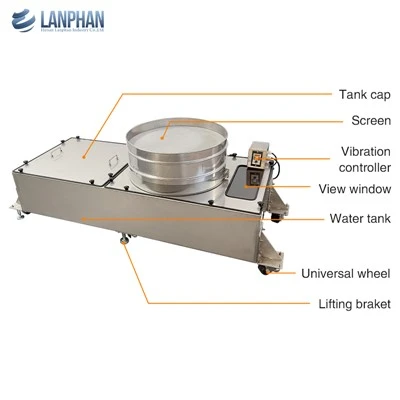
![Nest Recirculating Collect Tank]() Nest Recirculating Collect TankNest Recirculating Collect Tank is a stainless steel collection and filtration tank for closed-loop water recirculation in trichome separation and solventless processing systems. It integrates...
-
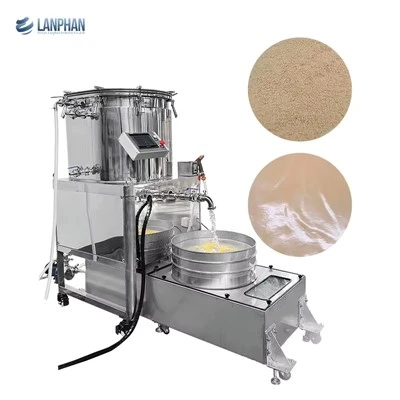
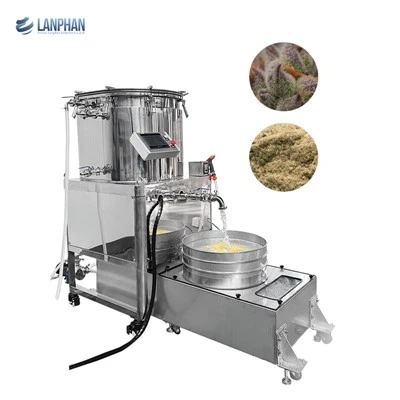
![Vortex Trichome Separator]() Vortex Trichome SeparatorThe Vortex Trichome Separator is a solvent-free separation system for suitable botanical biomass, using controlled counter-current vortex agitation with ice and water to separate trichome-rich...
-
![Trichome Extraction Separator]() Trichome Extraction SeparatorThe Trichome Extraction Separator is a batch processing unit for ice-water separation of trichome-bearing biomass, using controlled mechanical agitation for solvent-free plant material processing.


How to Choose a Trichome Separator
Match the Batch Requirement:
Compare your required batch load with the available separator models and avoid sizing equipment only by nominal vessel volume.
Define the Separation Process:
Confirm whether the process uses ice, water, wet biomass, or another material combination, as these conditions affect filtration and cooling configuration.
Specify Filtration Needs:
Filter specification should be selected according to the material residue, required separation method, and downstream collection process.
Check Plant Conditions:
Before ordering, confirm available floor space, loading access, electrical supply, cooling utilities, and connection requirements.
How Does a Trichome Separator Work?
Mechanical Separation:
The equipment uses controlled mechanical agitation to process plant material in a water- or ice-based separation process.
Vortex Processing:
The rotating system creates movement within the vessel to keep the process mixture in circulation during agitation.

Bottom Filtration:
After processing, the mixture passes through a bottom filter or strainer that retains plant residue for separation and collection.
Programmable Washing:
PLC control allows washing sequences to be set by operating time, rotation direction, switching interval, and rest period.
Case-Based Equipment Selection
Commercial Batch Processing:
For regular production, select the model according to actual batch requirements and planned production frequency rather than purchasing based only on equipment size.
Ice-Water Separation:
For ice-and-water processes, consider the required cooling arrangement, water circulation, ice supply, and filtration configuration as one system.
Space-Limited Facilities:
Where installation space is restricted, compare equipment footprint, access route, operator clearance, and auxiliary equipment placement before selecting a model.
Process Expansion:
If future production may exceed the standard model range, discuss larger vessel configurations or customized equipment before finalizing the production line layout.
Trichome Separator Technical Models & Specifications
|
Product Name |
Vortex Separator |
||
|
Model |
TS-50 |
TS-75 |
TS-75 Pro |
|
Capacity |
190L |
285L |
|
|
Maximum Processing Capacity |
14kg |
21kg |
|
|
Interlayer Volume |
30L |
47L |
|
|
Cooling Area |
0.9m2 |
1.35m2 |
|
|
Rotating Speed |
200-800rpm |
200-800rpm |
|
|
Power |
1.1KW |
||
|
Temperature range |
-20~100ºC |
||
|
Material |
304 |
||
|
Package Dimension |
1500*827*1360mm |
1700*1027*1360mm |
1160*1060*1950mm |
|
Package Weight |
400kg |
600kg |
515kg |
Processing & Application Compatibility
Botanical Material:
The separator is intended for mechanical separation of trichome-bearing plant material in batch processing.
Ice-Based Processing:
The equipment can be incorporated into processes using ice and water to separate material before filtration.
Wet Processing:
The vessel and filtration arrangement support processes where the material is handled as a wet mixture.
Solvent-Free Processing:
The listed separation method uses mechanical agitation and filtration without solvent-based extraction.
Custom Trichome Separator Solutions
Capacity Configuration: Custom vessel configurations can be discussed when standard models do not match the required batch size or production layout.
Filtration Configuration: Different filter specifications are available for processes with different separation and collection requirements.
Material Selection: 304 stainless steel is used for the standard configuration, with 316 stainless steel available for the vortex separator as an option.
Auxiliary Equipment: Chillers, stainless-steel tanks, filter bags, water pumps, ice makers, and recirculating collection tanks can be matched to the process setup.
Equipment Integration & Downstream Compatibility
Cooling System:
The separator's cooling jacket can connect to an external chiller for temperature-controlled processing.
Collection System:
Stainless-steel collection tanks and filter bags can be used downstream for material collection and handling.
Water Circulation:
Water pumps can be incorporated where the process requires transfer or recirculation between equipment.
Ice Supply:
Commercial ice makers can be integrated into ice-based processing lines according to batch frequency and ice demand.

Stainless Steel Fabrication: The separator is manufactured with stainless-steel process-contact construction, with the selected material grade confirmed in the order specification.
Equipment Assembly: The main assembly combines the processing vessel, agitation system, filtration section, cooling structure, and PLC control system.
Configuration Verification: The production specification should identify the selected model, filtration arrangement, material grade, electrical configuration, and auxiliary connections.
Pre-Shipment Inspection: The finished equipment is checked against the confirmed configuration before packing and shipment.
Installation, Utilities & Maintenance
Installation Space:
Allow clearance around the separator for loading, discharge, cleaning, inspection, and routine maintenance.
Electrical Connection:
Confirm local voltage, frequency, phase, and control-panel requirements before equipment production.
Cooling Connection:
Where external cooling is required, prepare the chiller, piping, fittings, and utility connections according to the confirmed configuration.
Routine Cleaning:
Clean the vessel and filtration components after each batch and inspect the filter for residue buildup, blockage, or damage.
FAQ
Q: What specific cooling capacity and flow rate requirements apply when connecting an external chiller to the TS-50 or TS-75?
A: The chiller must match the interlayer volume (30L for TS-50, 47L for TS-75) and target temperatures down to -20°C, with flow rates sized to your ambient load.
Q: Which specific agitation direction, switching interval, and rest period parameters can operators customize via the PLC?
A: Operators can program forward/reverse rotation times, interval pauses, and total processing duration to suit specific biomass types.
Q: How do the standard 304 stainless steel and optional 316 material grades differ under continuous ice-water operation?
A: Grade 316 provides higher resistance to pitting from organic compounds and mineral exposure, reducing long-term surface degradation compared to 304.
Q: What vertical clearance and ceiling height limitations should facilities consider for the TS-75 Pro (1950mm height)?
A: Facilities need sufficient overhead space for operator loading access, potential lifting equipment, and internal component removal during servicing.
Q: Can the electrical control cabinet be customized for non-standard regional voltages, frequencies, and enclosure ratings?
A: Yes, electrical configurations are adapted to match local power supplies and required industrial standards during order finalization.
Q: How does the drive maintain torque at the lower end of the 200-800rpm speed range under heavy loads?
A: The variable-frequency drive utilizes motor control tuning to sustain adequate torque at lower speeds, preventing stalls under dense wet-biomass loads.
Q: What testing data or inspection records are included in the pre-shipment report regarding mechanical components?
A: Factory checks cover dynamic rotation testing, electrical safety verification, and dimensional checks aligned with internal quality protocols.
As one of the most professional trichome separator suppliers in China, we have world-leading production equipment and strong manufacturing capabilities. Please rest assured to wholesale advanced trichome separator for sale here from our factory. For price consultation, contact us.